You are not alone

If you are struggling with your relationship with opioids or opioid dependence, you’re not alone. Approximately 160,000 Australians are estimated to be dependent on opioids.1

Up to 1.3 million Australians are dependent on drugs or alcohol.1

It's estimated that approximately 160,000 people are dependent on opioids in Australia.1

Over 198,000 people received treatment for alcohol and other drug use in Australia during 2022-23.1

What is an opioid?

Opioids are a type of medication commonly prescribed to manage pain. They can be derived from natural sources, modified from naturally occurring compounds, or created synthetically in a laboratory.2

These medicines are often prescribed for moderate to severe pain relief, such as after surgery or for chronic conditions. However, prescription opioids also have the potential to cause side effects and may lead to dependence if not used carefully as directed under medical supervision.2

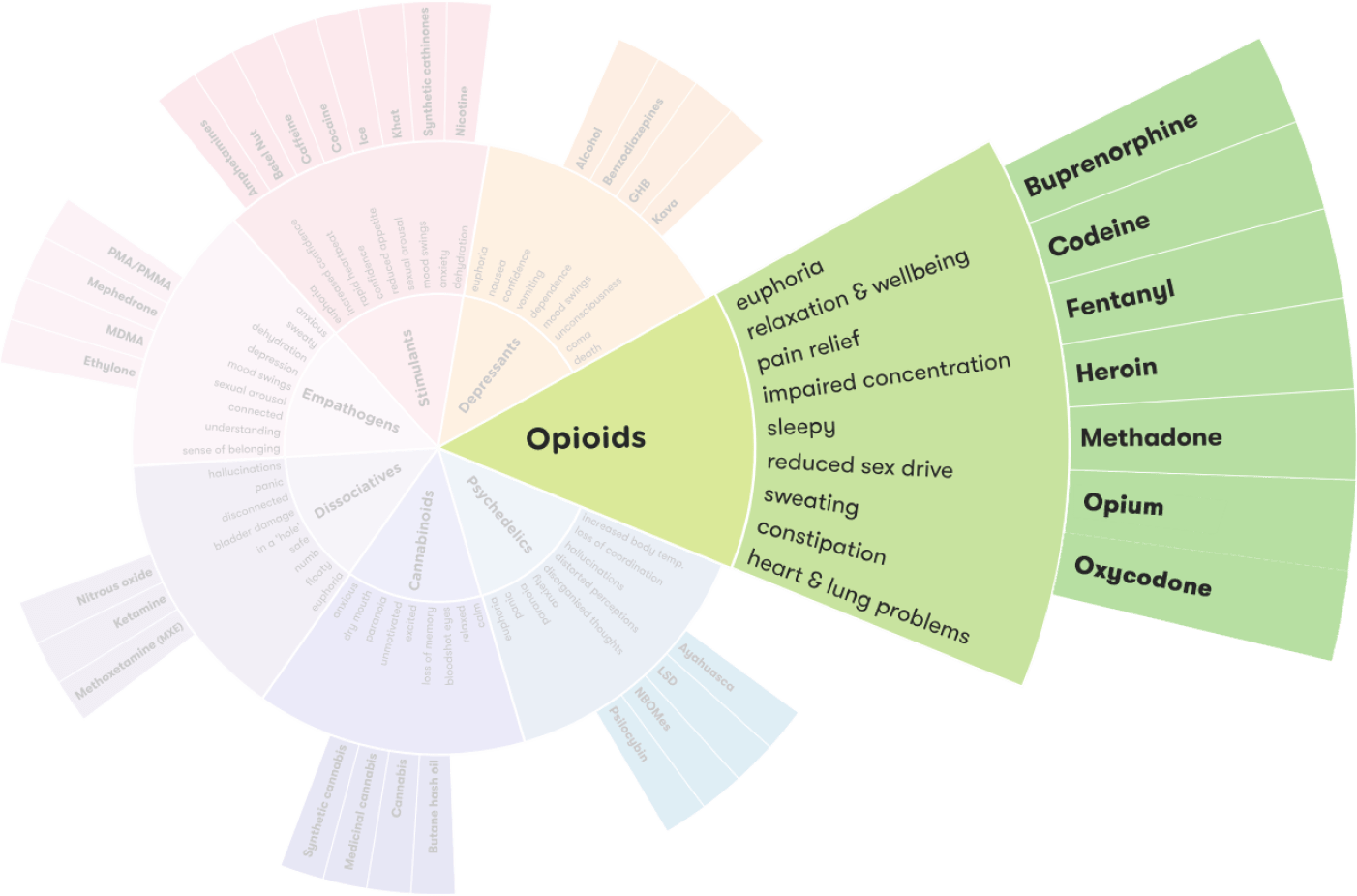
Common opioids include heroin, morphine, codeine and oxycodone. Opioids may also be referred to by names such as smack, gear and oxy.3

*Note: this is a sample only and is not the full list of all opioids and has been adapted from Alcohol and Drug Foundation.3
What is opioid dependence?

A sign of dependence is experiencing withdrawal symptoms when you try to stop using opioids.4

No one plans to become dependent on a medicine, but prescription opioids are associated with a high risk of dependence.5

Like other conditions, opioid dependence has specific symptoms and a pattern of progression, where it tends to get worse over time.6

01

Opioids trigger the brain’s reward system.7

02

Repeated use of opioids alters the brain’s normal functioning.7

03

Your brain becomes used to opioids and functions abnormally when they are not present. This can be shown through physical, emotional or psychological changes.7

04

Opioid tolerance is the need to take higher and higher dosages of drugs to achieve the same effect.7

Want to change how you use?

So, you may be wondering ‘Where to start?’ – this website is a tool you may use to discover what might work best for you. Whether it’s connecting with a healthcare professional, seeking peer support, or exploring other options, everyone’s journey looks different.

It’s also important to remember that feeling respected, empowered, and treated with dignity is essential – these can all help you feel supported and can be an important factor in achieving your goals, no matter what that may be.

Check out the various types of support available here

Check out this discussion guide to support your conversations with healthcare professionals.

If the content shown on this website is uncomfortable and not right for you, please click below to exit.

Disclaimer: The website is not intended to substitute professional medical advice, diagnosis or treatment. You should seek the advice from your healthcare professional before making decisions about your circumstances.


If you are feeling overwhelmed or have difficulty staying safe, call Lifeline for confidential one-to-one support with a trained telephone crisis supporter.

Help us make a difference so we can understand if our resources have been useful.

Survey

You are about to leave a Camurus website.

By clicking this link, you will be taken to a website that is independent from Camurus. Camurus is not responsible for the content provided on that site.

Camurus Pty Ltd. ABN 79 627 784 605. 223-225 Liverpool Street, Darlinghurst NSW 2010. Ph: 1800 142 038. AU-NPR-2600050 | June 2026

Continue to Link Go Back